
On Developer Platform Experiments
Hat, Haircut, or Tattoo? Choosing the Right Depth of Change

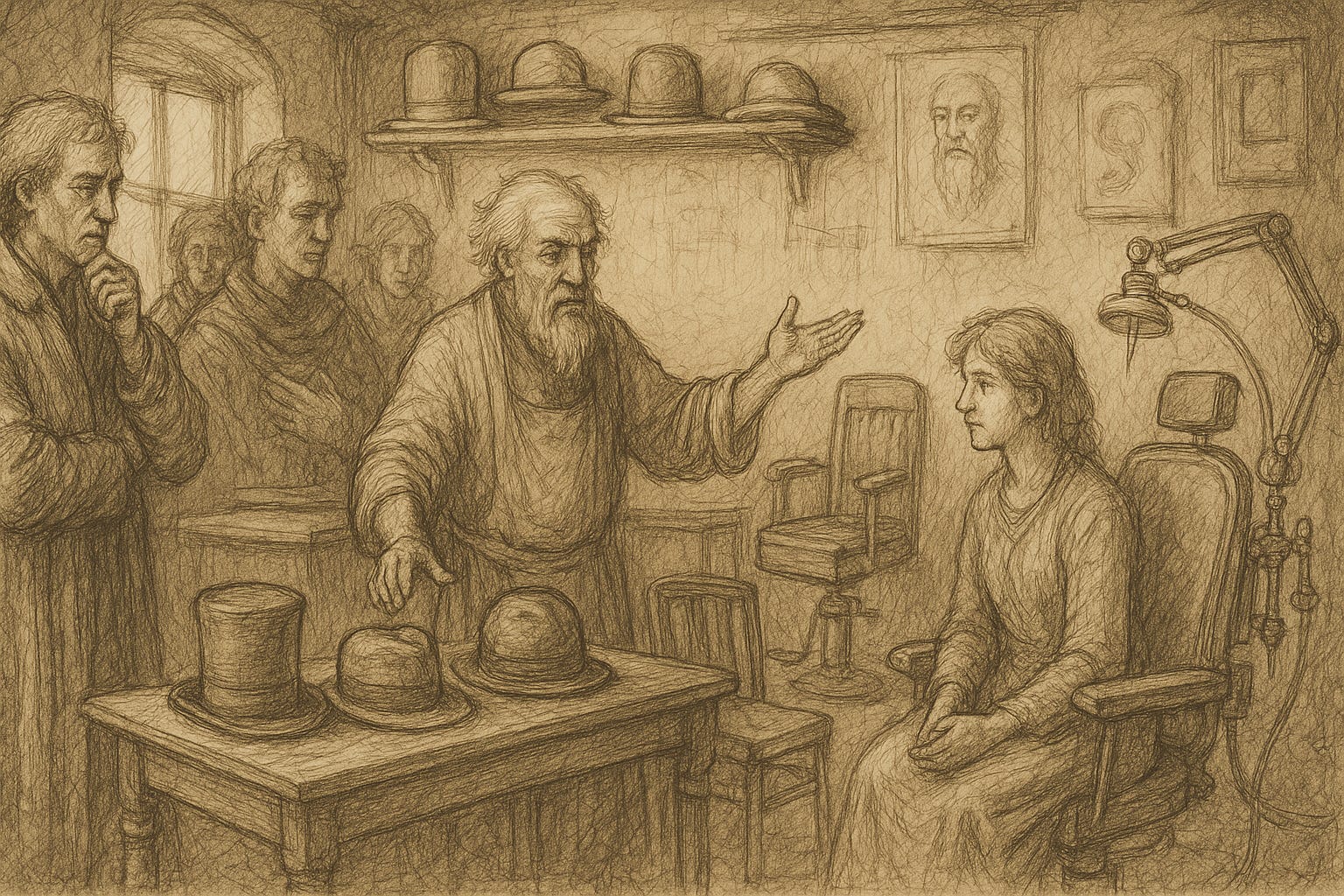
This enchiridion entry follows on from the short story:

In most organisations I’ve worked with—from the gladiatorial trading floors of banks to the half-feral start-ups running on ramen and hope—there is a recurring moment in platform engineering that looks innocuous but isn’t. It happens whenever someone says: “We should add this to the roadmap.” Depending on the room, it lands like a suggestion, a threat, or a prophecy.
Some people hear “roadmap” and imagine a grand strategy. Others hear it as a shopping list written by the loudest voice in the meeting. Most, if we’re honest, treat a roadmap like a contract drawn up between competing anxieties. That’s why they age like milk: the ink dries while the world changes, and soon your “Q3 item” is a guilt-ridden artefact of a decision made by people who have since forgotten why they made it.
Platform teams feel this pain acutely. A platform roadmap is supposed to represent engineering truth—a picture of how to reduce cognitive load, accelerate flow, and remove friction for developers. But it often becomes a burden of obligations, a museum exhibit of good intentions and bad bets. And the tragedy? Most of these bets never needed to be bets. They needed to be experiments.
This is where the beautifully irreverent framing of “Hat, Haircut, or Tattoo?” comes in. I first heard it from product folks who were tired of watching teams paralyse themselves with false choices. A hat is something you try on. A haircut is reversible, but with a cost. A tattoo? That’s a commitment, a structural change. The wisdom is simple: don’t get a tattoo when what you need is a hat. Don’t pretend a tattoo-level change is just trying something on.
Platform engineering, of all disciplines, demands such discernment. Because platform teams operate in a habitat of interdependencies—security constraints, regulatory pressures, developer experience, cognitive load. A miscategorized change can silently shatter trust. Imagine rolling out a “small tweak” to the Golden Path that actually invalidates dozens of downstream workflows. That wasn’t a hat. That wasn’t even a haircut. That was a back-alley tattoo with questionable hygiene.
The psychology matters, too. Developers will tolerate hats. They’ll negotiate haircuts. But tattoos? They want to be consulted—extensively, exhaustively, sometimes dramatically. People react very differently depending on what level of change they think you’re inflicting upon their world.
The magic of the Hat/Haircut/Tattoo model is that it forces you to ask the question platform teams avoid most: What is the smallest safe experiment we can run?
Not the most ideal. Not the most impressive. Not the version that will win you applause in the strategy review. The smallest move that reduces uncertainty.
When you classify roadmap items correctly, something extraordinary happens:
Your roadmap becomes a portfolio of experiments, not a list of semi-delusional commitments.
Your developers regain confidence in change.
Your team learns faster than the organisation can politicise the learning.
Platform engineering, perhaps fast-feedback product engineering in general, is not the art of being right. It’s the art of being wrong safely, quickly, and affordably.
Hats, haircuts, tattoos. Simple? Yes. Childish? Maybe. Transformative? In my experience, absolutely.
Before you commit to a tattoo, make sure you aren’t just cold and reaching for a hat
Platform teams must constantly make decisions under uncertainty. The danger is over-committing early or under-investing when a structural change is needed.
The Hat/Haircut/Tattoo heuristic rebalances roadmap thinking by:
Aligning the depth of experimentation with the depth of impact
Encouraging shallower approaches first, reducing risk while learning faster
Clarifying expectations with stakeholders and developers
Turning platform strategy into controlled exploration, not heroic forecasting
Some helpful definitions for Platform Engineering
Hat (Try It On)
Characteristics: Lightweight, low-risk, reversible.
Platform examples: Feature flag adjustments, small UX/UI tweak, optional toolchain preview, sandbox environment, a new CLI subcommand.
Purpose: Learn cheaply whether a direction has traction.
Haircut (It’ll Grow Back)
Characteristics: Medium-risk, partially reversible, noticeable user impact.
Platform examples: Deprecating an old deployment path, updating CI defaults, introducing a new Golden Path template, migrating from one logging library to another.
Purpose: Improve flow or safety with expectable user friction.
Tattoo (Permanent Structural Change)
Characteristics: High-risk, irreversible, foundational.
Platform examples: Moving to a new orchestration model, adopting a new identity provider across all systems, rewriting provisioning pipelines, major architectural constraints.
Purpose: Establish long-term platform identity and capability.
Some practices to consider
Classify Every Roadmap Item by Depth — Run the triage: Hat, Haircut, or Tattoo? Make this classification is explicit.
Demand Evidence Before Tattoos — Tattoos require:
A business case
Observability metrics
User research
Safety constraints
Clear rollback meaning (“How would we (painfully, possibly badly, but necessarily) remove this tattoo?”)
Start Every Tattoo as a Hat — Break it into slices:
A simulated workflow
A shadow environment
A small cohort trial
Haircuts Need Care Plans — Document temporary pain:
Migration windows
Hand-holding
Support channels
Timeline for “growing back”
Hats Must Produce Learnings — Do not celebrate hats; measure them. A hat that teaches nothing is fashion, not engineering.
Things to avoid
Allowing the Tattoo Misunderstanding — A leadership team thinks they’re approving a hat. The engineers know they’re being asked for a tattoo. Disaster ensues.
Haircuts Without Warnings — Developers lose trust when mid-level changes arrive without context.
Cosmetic Hats Masking Structural Rot — Small experiments that distract from necessary tattoos.
Your roadmap is not a prophecy. It is a controlled series of bets.
The Hat/Haircut/Tattoo model prevents you from betting the organisation’s trust on changes that should have been reversible—and prevents you from timidly wearing hats when the platform desperately needs a tattoo.
Platform engineering is the craft of designing safe evolution. Try things. Learn fast. Cut carefully. Tattoo rarely.
But above all: know, manage, and communicate the difference.