The Illusion of the Oil Painting in a Pointillist Life
A Story of Mountains, Dots, and Other Inconveniences

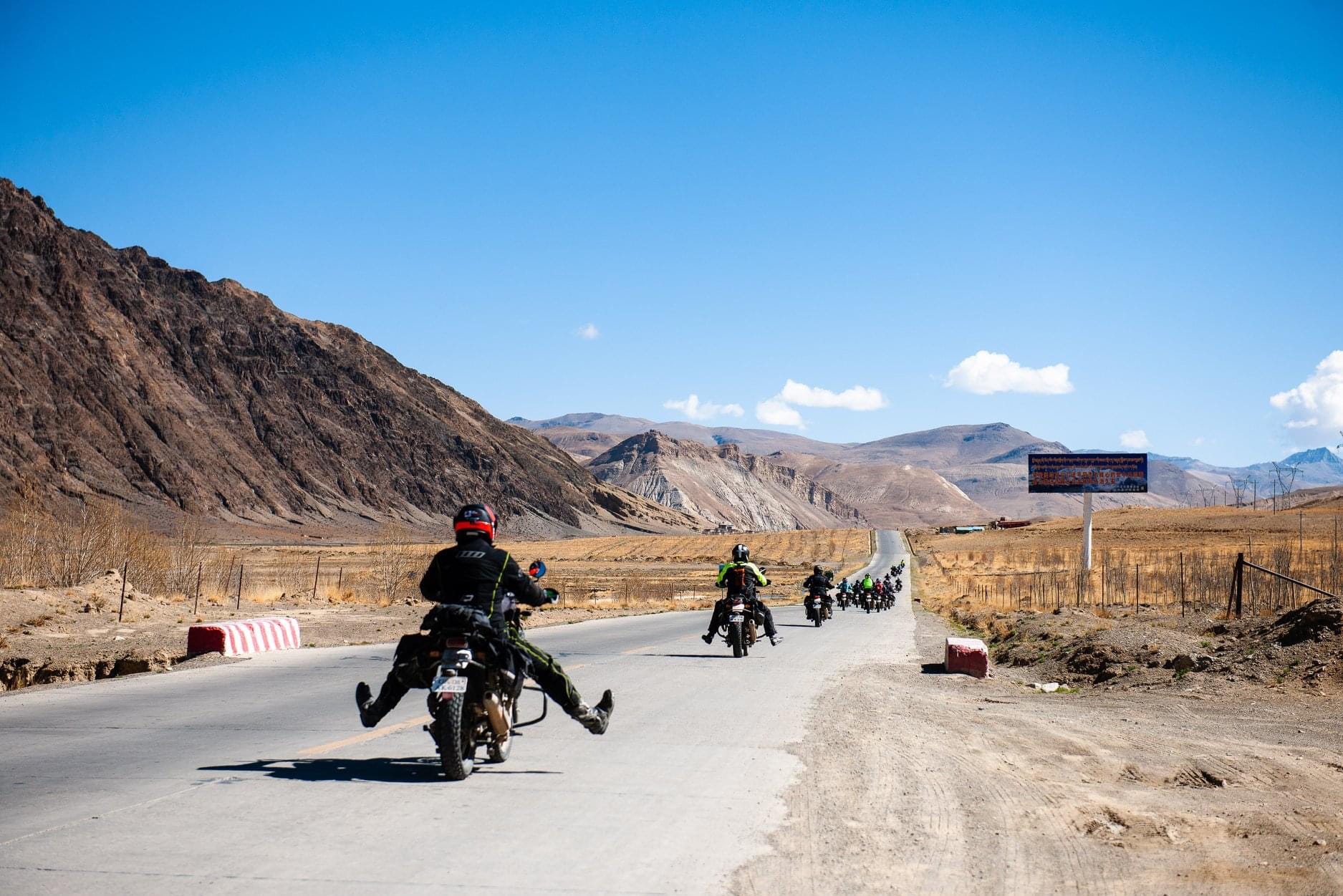
In May 2018 I decided to do something “utterly mad”. I know it was mad by the number of people who told me. Friends, family, even strangers. The best reaction I got when I shared my plans was, “Why?”
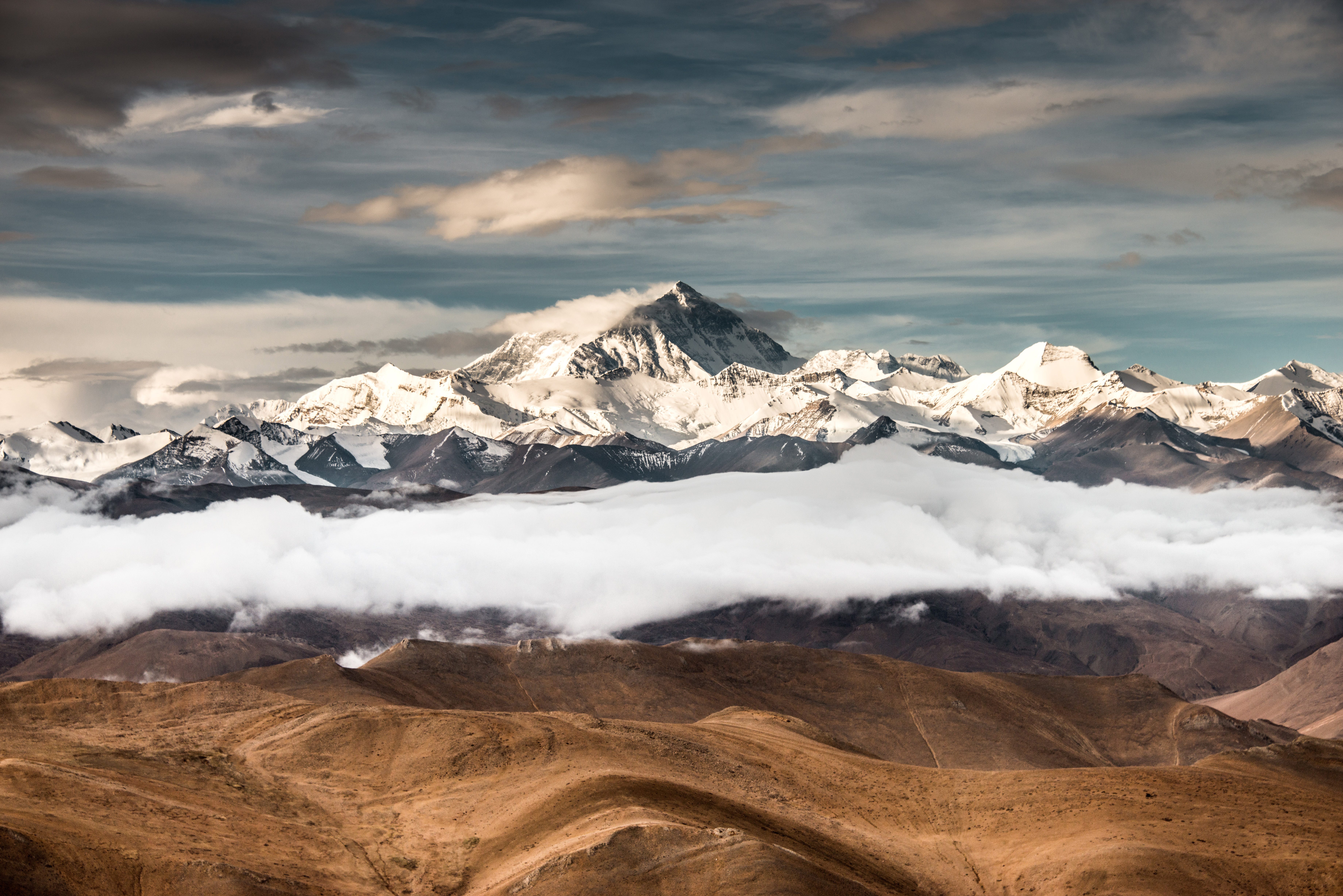
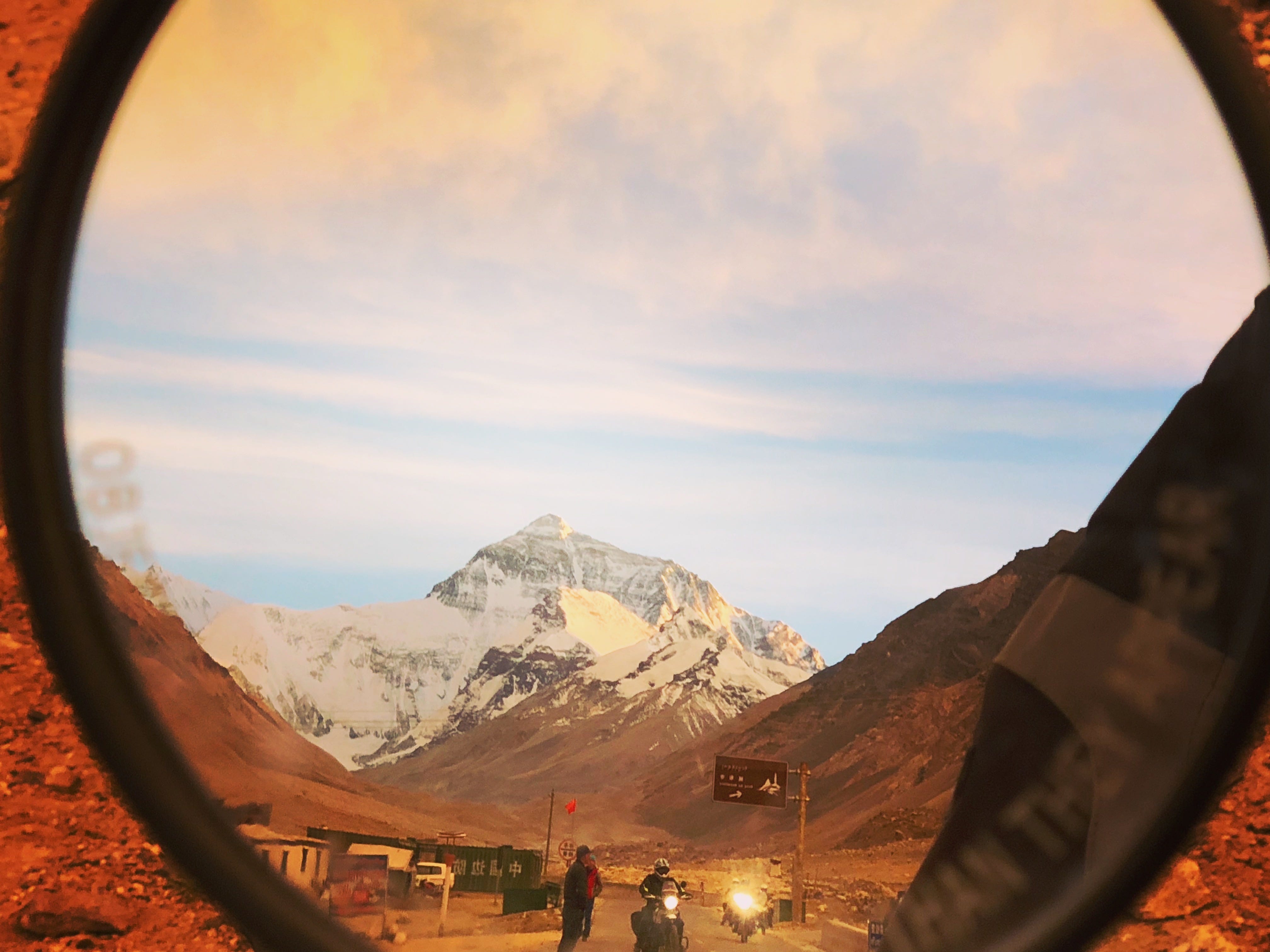
I was going to ride a motorcycle to Chomolungma. Or “Mount Everest” as we tend to call it. Only to Base Camp North, in Tibet, not up the whole thing. Just to 16,900 feet. A bit below the highest mountain in Europe. It was an adventure, not a holiday.
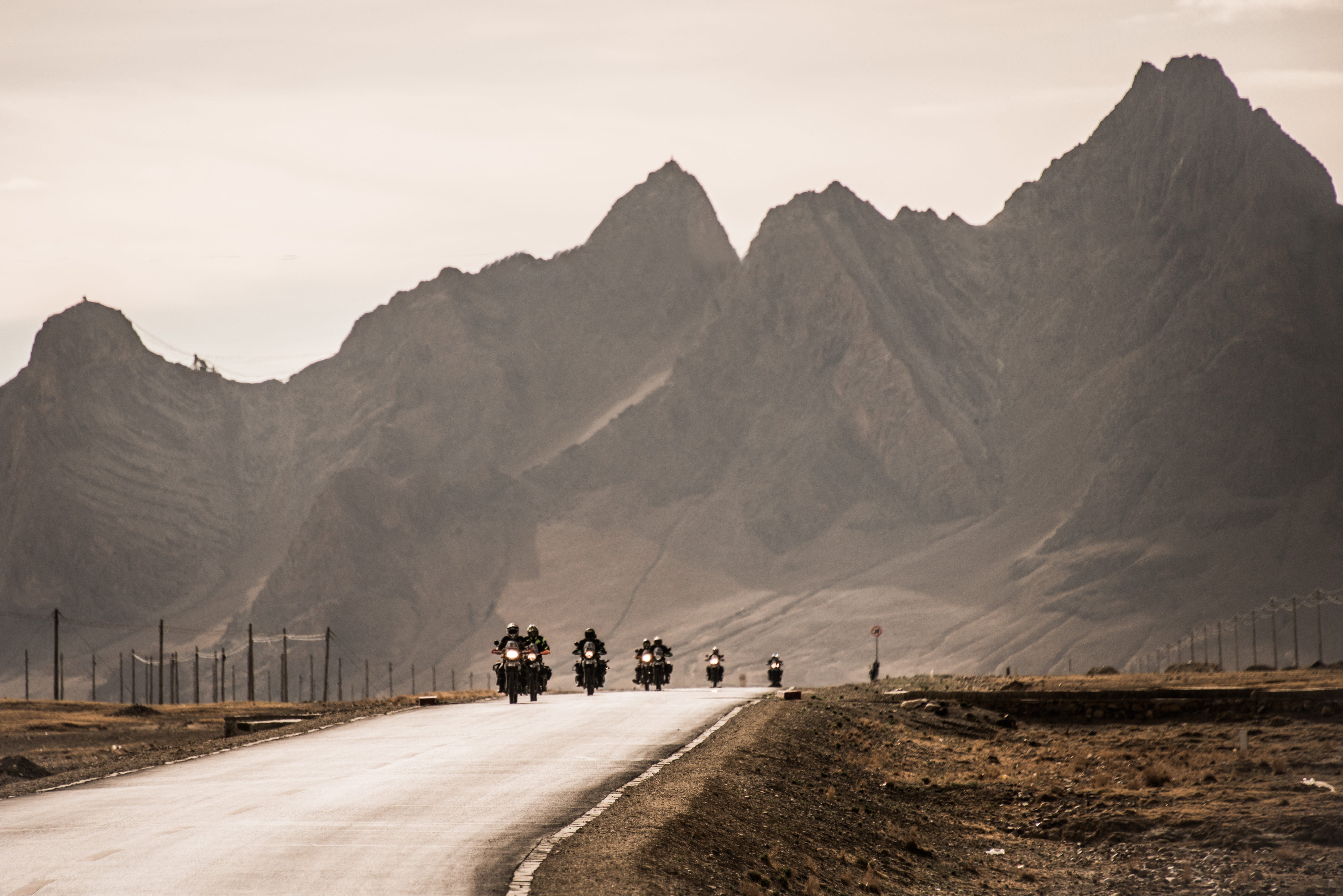
Together, 27 of us, plus 8 support team members, rode out from Kathmandu, through the Himalaya, across the incredible Tibetan Plan to Lhasa and then down to Everest Base Camp North. Before finally returning to Kathmandu tired, elated, and celebrating my birthday — the last day of the tour happened to be when I turned a year older.
On this journey I started writing this story. Watching people take photos and hearing strangers talk about how they were travelling to make sense of their lives.
I started seeing a contrast with how I was beginning to view the world.
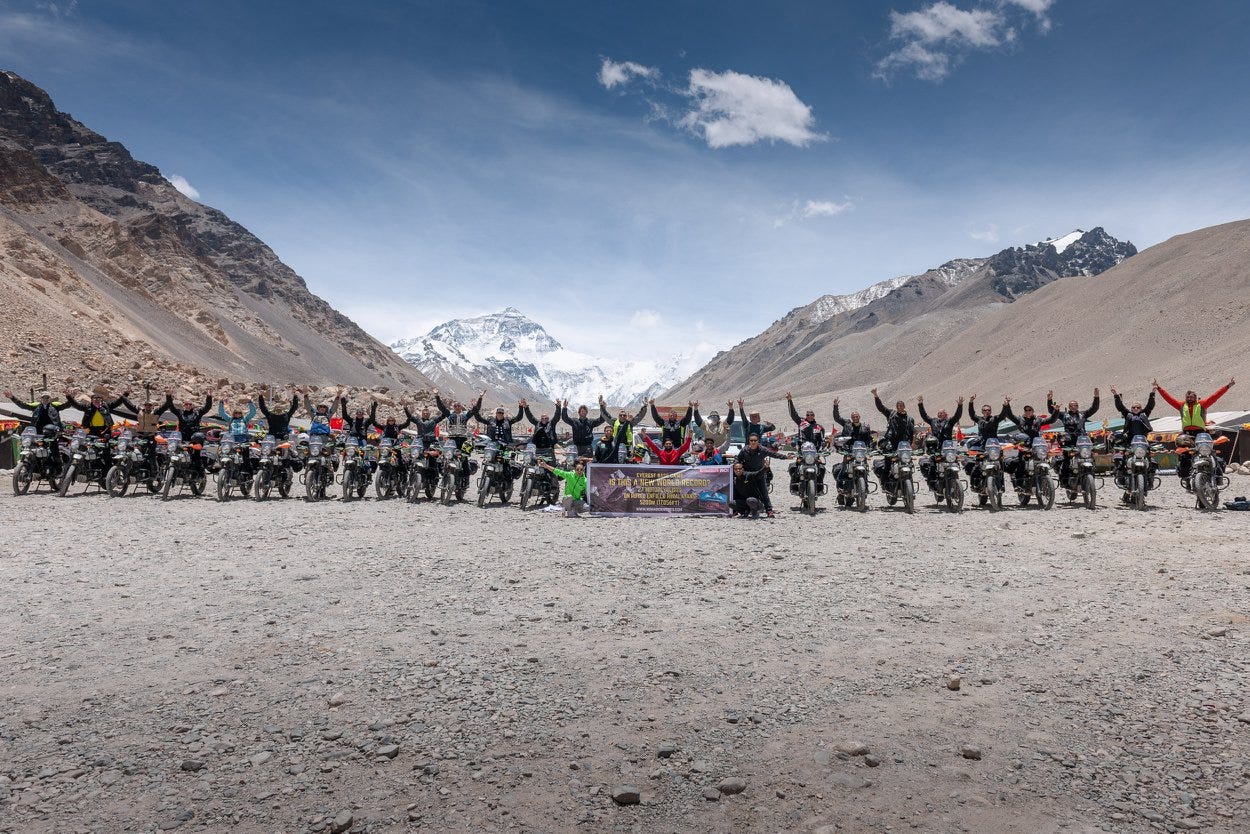
They viewed their lives as if they are sweeping oil paintings—grand arcs, deliberate compositions, meaningful transitions. They imagined themselves standing back from the canvas, arm extended, laying down confident strokes: career, love, identity, purpose. Beginning, middle, end. Narrative coherence. A signature in the corner. A beautiful picture of Everest to state “I was here!”
(Yep, I did actually take a photo like that…)
But my take was changing. I was coming to the realisation that life is actually pointillist. Up close, there are no sweeping gestures. There are only dots. Tiny, stubborn, unglamorous, beautiful — powerful when you notice them — dots:
This morning’s mood.
That half-heard comment.
A line of code you didn’t quite understand but copied anyway.
A cup of tea you didn’t savour.
A moment of restraint.
A moment of cowardice.
A moment of kindness no one noticed.
Each dot is insufficient. None of them explains anything. Many of them feel wrong—out of place, the wrong colour, badly timed.
And yet the oil painting is retrospective. It only exists after distance has been introduced.
When we say:
“That was a turning point.”
“That period made me who I am.”
“It all came together.”
—we are standing several metres back from the canvas, squinting. We are compressing thousands of dots into strokes that were never painted that way.
This illusion is not a lie. It is a useful fiction. Humans need coherence to survive. Without it, we drown in contingency. But the danger comes when we try to live as if we are already painting in oils.
When we expect:
clarity before accumulation
meaning before repetition
confidence before evidence
identity before practice
That’s when frustration sets in. Because the brush never arrives.
Instead of this view, I was noticing that I was starting to live inside the dots. Pointillism is cruel at human scale. From one inch away. There is no picture, no trajectory, no feedback loop that says “yes, this is working”
Just dots. And hope. You don’t feel like you’re becoming wiser. You feel like you’re answering one email slightly better than last time.
You don’t feel like you’re learning. You feel like you’re confused in slightly more specific ways.
You don’t feel like you’re building a life. You feel like you’re just showing up again.
This is why impatience happens and is so damaging. It is an attempt to force oil-painting logic onto a pointillist process.
My meaning would instead emerge sideways. My discipline was becoming pointillist-friendly. To place another dot without knowing what it contributes to.
This is why habits outperform epiphanies. Why listening changes lives more than advice. Why what you do matters more than vision. Why most real transformations feel boring while they’re happening.
Since that incredible tour to Everest I have developed the view that I am not trying to:
“Paint a masterpiece.”
But:
“Place honest dots.”
Today’s dot doesn’t need to justify itself. Tomorrow’s dot doesn’t need to match. The picture is not my responsibility. My responsibility is attendance.
And one day—usually much later, usually by someone else—the oil painting appears.
Not because I painted it that way. But because life, viewed from a distance, is generous to those who kept placing dots when nothing made sense.
And especially when the latest dot is, according to absolutely everyone, plain “mad”.
I hope you enjoy this story.
A Story of Mountains, Dots, and Other Inconveniences
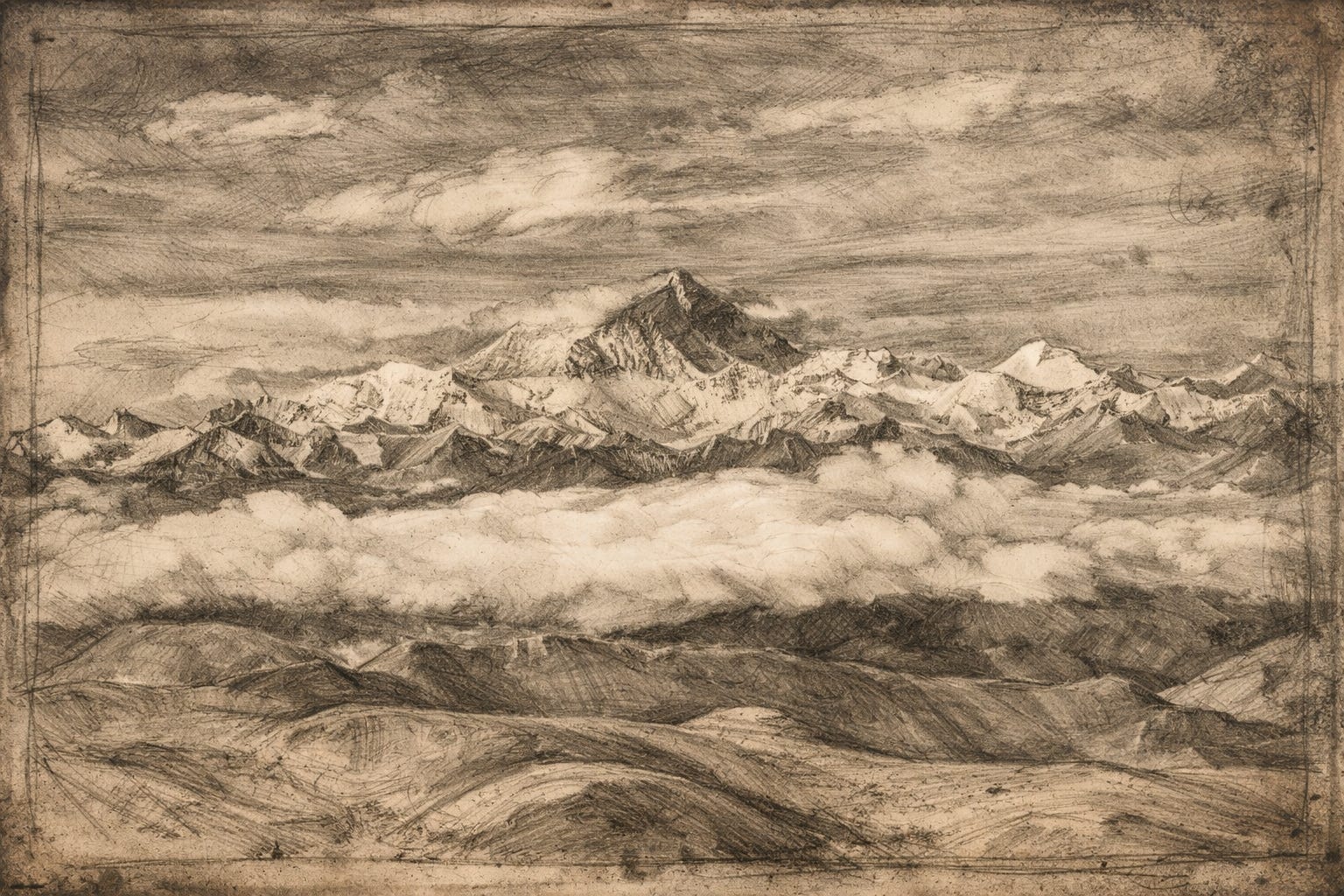
At 14,700 feet, the air in the Himalayas has a way of editing you.
It takes your sentences and removes the subordinate clauses. It pares your ambitions down to nouns. It makes your plans shorter, your hopes and ideas simpler, and your ego—if you have brought one, as most people do—noticeably more portable. Even the mountains seem to approve of this. They are, after all, some of the oldest minimalists on Earth: vast, cold, and entirely uninterested in your personal brand.
This is why, when Arthur Pritchard arrived in the village of Chomkar (which may or may not exist, depending on what you mean by “exist”), he found his previous life—consultant, keynote speaker, collector of productivity systems—falling away like a badly glued moustache.
Arthur had come for a photograph.
Not a photograph of himself, you understand. He was not that kind of traveller. He was the other kind, the kind that claims not to care about such things while quietly arranging reality into something flatter and more flattering. His aim was to capture, in a single sweeping image, the essence of his own life “arc.” He did not use the word “arc” aloud because even he would have heard how ridiculous it sounded. But it lived, smug and upholstered, somewhere behind his eyes.
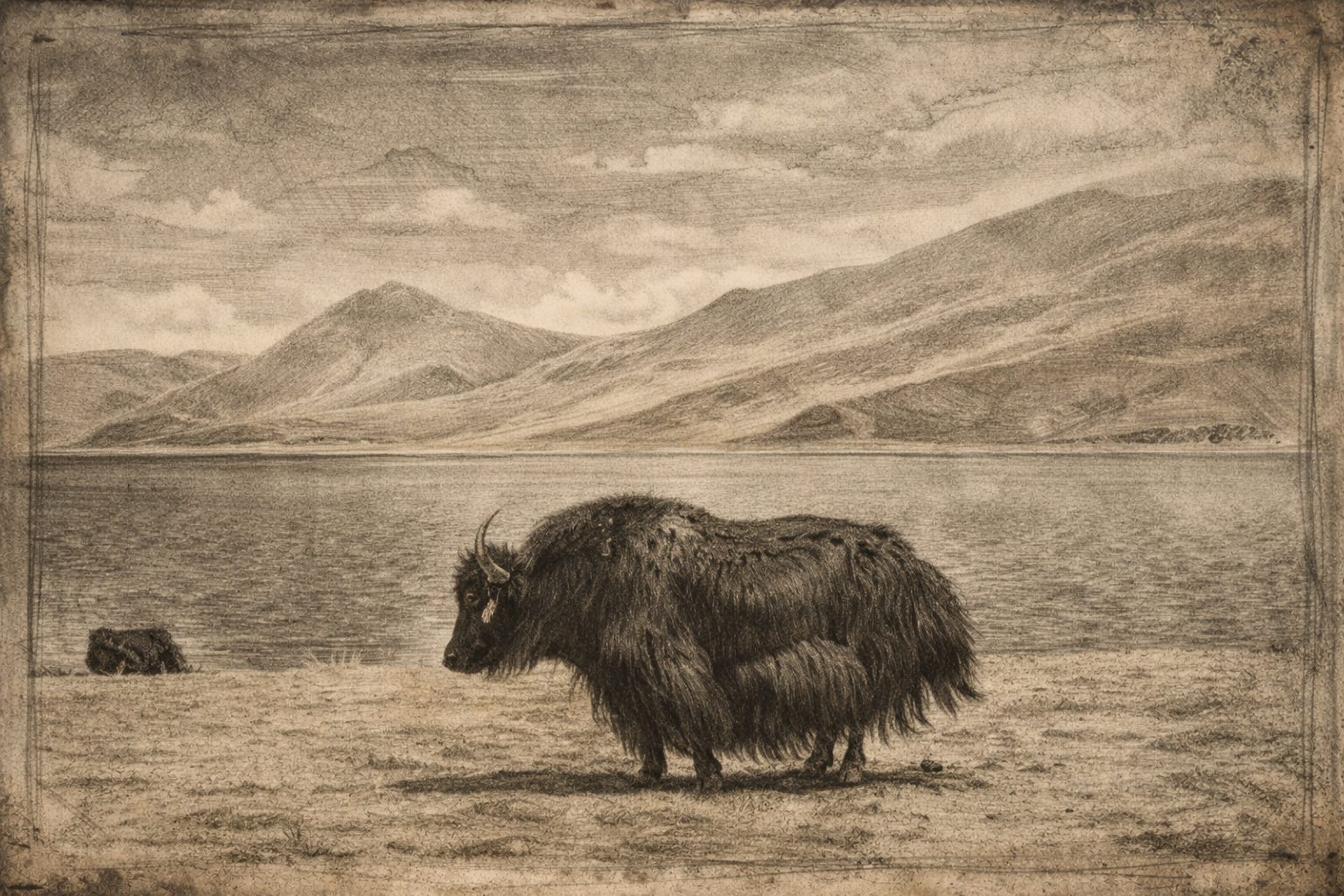
He had a plan for the photograph. The plan involved sunrise, a ridge line, a prayer-flag silhouette, and—if the universe could be relied upon to be cooperative for once—a small yak crossing the frame at precisely the right moment. There were, he believed, only two kinds of people: those who left things to chance and those who managed outcomes. He had been raised on a diet of managed outcomes, garnished with case studies.
Chomkar, regrettably, had been raised on weather.
On his first morning the sky was the colour of an unhelpful spreadsheet. On his second morning a cloud arrived, sat on the village like a tired cat, and refused to move. On his third morning he found the ridge he had scouted and discovered that someone—either a god, a monk, or a bored adolescent—had nailed a hand-painted sign to a rock.
It read:
THE MASTERPIECE IS CLOSED FOR MAINTENANCE.
PLEASE ENJOY THE DOTS.
Arthur stared at it for a full minute, which at 14,700 feet is about as long as most people can stare at anything without remembering they should be breathing and drinking their weight in water.
A voice behind him said, “That sign gets a lot of visitors.”
Arthur turned and saw a man—or perhaps a woman; the Himalayas are not obliged to clarify—wrapped in a robe that was either old or carefully made to look old. Their face had the calm of someone who had long ago stopped trying to win arguments with the universe. A thin smile lived at the corner of their mouth like a secret.
“I didn’t see it yesterday,” Arthur said.
“It wasn’t there yesterday,” the robed figure replied.
Arthur felt an irritation he could not quite justify. “So you… move it?”
“Sometimes it moves itself,” the figure said, as if this were the least remarkable thing in the world. “Sometimes it is moved by people who need it.”
“I don’t need it.”
The figure nodded gravely. “Of course not.”
Arthur had encountered this sort of person before: the serene contrarian. The spiritual heckler. The ivory tower architect. People who speak in riddles because speaking plainly would deprive them of their only source of entertainment and impact in the world.
“I’m here,” Arthur announced, “to take a photograph.”
The figure peered at him. “A photograph of what?”
Arthur gestured broadly at the mountains, the valley, the whole dramatic arrangement. “Of… this.”
The figure squinted. “Ah. A large photograph.”
“Yes.”
“An oil painting,” the figure said.
Arthur blinked. “It’s a camera.”
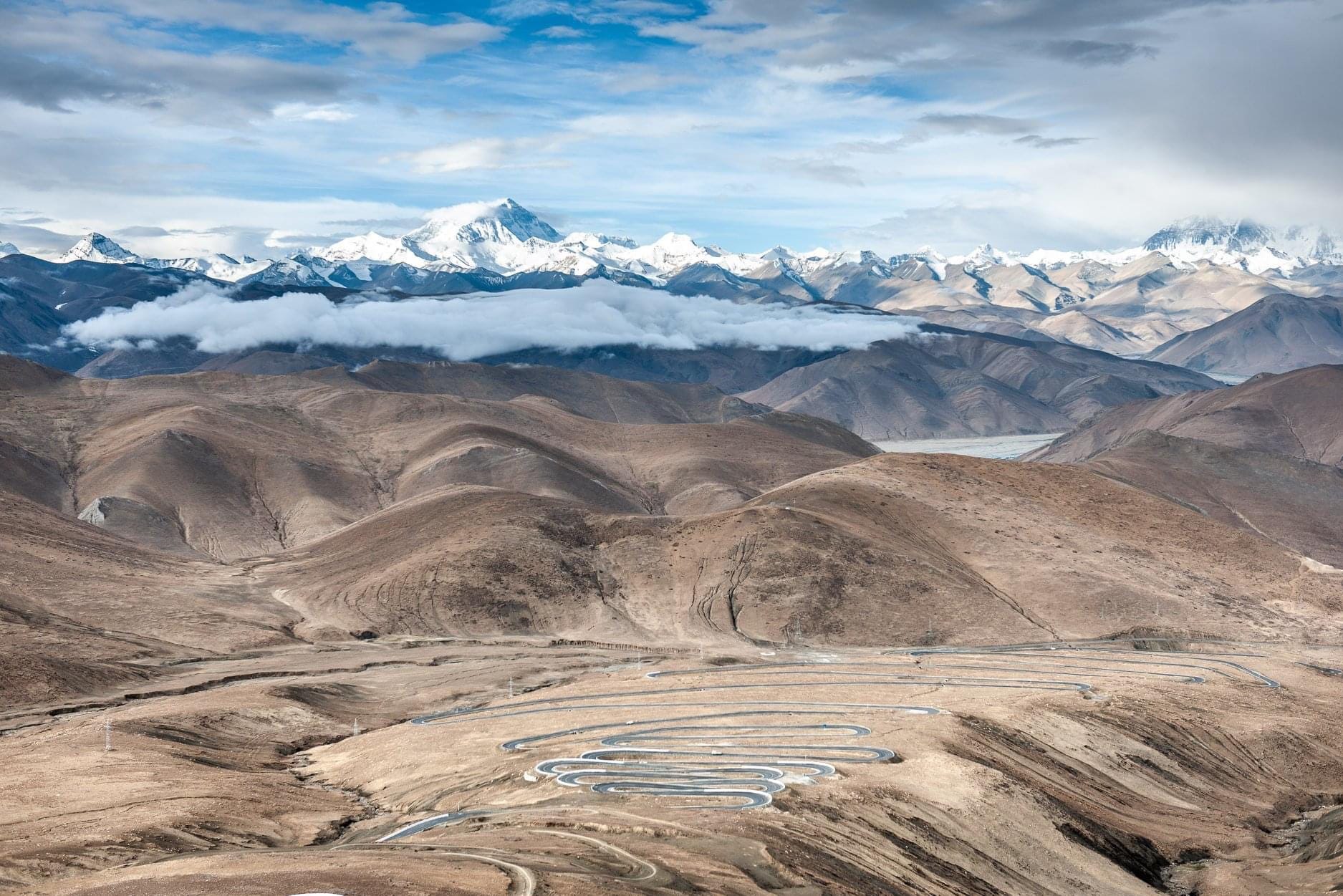
“No,” the figure said, patient as a glacier. “I mean the kind of photograph that wants to be an oil painting. Sweeping. Heroic. The sort of image that says, Here is the story, complete, with a satisfying beginning, middle, and end.”
Arthur hesitated, because this was uncomfortably accurate. He hated when strangers did that.
“And you,” the figure continued, “are disappointed because the mountains refuse to cooperate with your narrative.”
Arthur opened his mouth to deny it, but in thin air denial takes extra effort.
The figure sat on a rock with the casual ownership of someone who has never had to pay rent to a mountain. “Come,” they said. “You will meet someone who can help.”
Arthur had learned, in airports and conference centres, to avoid invitations from mysterious locals. Mysterious locals often led to expensive drinks, regrettable tattoos, or spiritual revelations you didn’t have time to integrate. But here in Chomkar there was nowhere else to go, and besides, his plan was already failing in ways he could not control.
“Fine,” he said. “But I have a schedule.”
The figure rose. “So does the weather,” they said, and began walking.
They did not walk along the main path. They did not walk along any path Arthur could see. They walked into what appeared to be a random patch of stones and scrub, and yet their feet landed with the confidence of someone who already knows where the ground will be. Arthur followed, slipping, cursing softly, and privately composing a complaint he would later frame as a humorous travel anecdote on Tripadvisor.
After twenty minutes they reached a low stone building. It looked like a storage shed that had decided to become a monastery and never quite followed through. A single door. No windows. A faint smell of incense, damp wool, and humanity.
The robed figure knocked once.
From inside came a voice, muffled and mildly annoyed: “If you are selling enlightenment, I already have too much.”
“It’s not for you,” the robed figure said. “It’s for him.”
The door opened.
Inside sat a woman at a small table. She wore glasses—an affront, Arthur thought, to the romantic purity of the scene—and she was hunched over what looked like a vast sheet of paper. Not a single sheet. A continent of paper. It covered the table, spilled to the floor, and climbed the walls in curling margins.
The woman looked up. “Oh,” she said, not enthusiastically. “A tourist.”
“I’m not—” Arthur began.
“Yes you are,” she said. “They always start with that.”
Arthur decided to dislike her immediately. She had the kind of bluntness that made his inner manager reach for a performance appraisal note marked Developing.
The robed figure bowed slightly to her. “Archivist,” they said.
“Don’t call me that,” the woman replied. “It makes me sound important. I’m a caretaker with an obsession.”
Arthur glanced at the paper. It was filled with tiny marks. Dots, mostly. Thousands. Tens of thousands. Different colours. Different densities. Some areas looked like noise. Others looked like… something.
“What is that?” Arthur asked despite himself.
“A map,” the woman said.
“A map of the mountains?”
“A map of lives,” she replied, as if this were the obvious next thing to map once you’ve done rivers and roads.
Arthur laughed. It came out as a wheeze. “That’s absurd.”
The woman nodded. “Yes. It is. Also accurate.”
She stood and motioned him closer. The paper was not paper at all, Arthur realised. It was more like layers of thin vellum, stacked and stitched, translucent in places, opaque in others. The dots were not printed. They were placed by hand. Each dot had a slight bump, like dried paint.
“Pointillism,” Arthur murmured, because he had once dated someone who had taken an art history elective and had forced him, lovingly, to learn.
The woman looked pleased despite herself. “Good,” she said. “At least you have one useful piece of cultural luggage.”
Arthur peered at a section of the map and saw what looked like a village. Not Chomkar, perhaps, but something like it. The dots clustered into shapes: a path, a river, a ridge. Then, stepping back a little, he saw something else. A pattern. A face? A story?
He leaned in again and the pattern disappeared into dots.
“This is… not stable,” he said.
“Exactly,” the woman replied. “Up close, you get the truth. From far away, you get the story. People confuse the story for the truth and then get angry when reality behaves like dots.”
Arthur frowned. “And you make these?”
“I keep them,” she said. “They arrive.”
“They arrive.”
“Yes,” she said. “From travellers. From villagers. From people who don’t know they’re leaving anything behind. A dot here. A dot there. A kindness. A cruelty. A cup of tea. An unspoken apology. We catalogue them.”
Arthur felt a ridiculous urge to check whether she was pranking him. There was no hint of prank. Only exhaustion.
The robed figure said softly, “Tell him about the oil painters.”
The woman sighed, as if she had told this story too many times to people who wanted it to be simpler. Like explaining pointers in C to someone living in C#.
“Sometimes,” she said, “someone comes here insisting their life is a sweeping oil painting. They want the heroic version. The narrative arc. The signature. They want to stand back and say: Behold, coherence.”
Arthur crossed his arms. “That’s not unreasonable.”
“It’s not,” she agreed. “It’s just not how it works. Life is dots. The oil painting only appears when you stop demanding brushstrokes and start placing honest marks.”
Arthur stared. “So what—this is… a metaphor monastery?”
The woman smiled thinly. “Everything is a metaphor monastery if you’re annoying enough.”
Arthur bristled. “I’m not annoying.”
The robed figure cleared their throat in a way that suggested they had a comprehensive file of evidence to the contrary.
“Fine. Suppose life is dots. What am I meant to do about it?”
The woman leaned closer, her glasses catching the thin light. “Stop trying to control the picture. Start being responsible for the next dot.”
Arthur frowned. “That’s just… habits.”
The woman’s face did something complicated—half amusement, half pity. “Yes,” she said. “But do you know how few people can tolerate the boredom of that truth?”
Arthur opened his mouth, closed it again, and in that pause heard something he had not heard for a long time:
Silence.
Not the silence of a muted microphone or an awkward meeting. The silence of altitude and stone. A silence so large it made his internal narration sound like a cheap radio. He looked at the map again.
There, among the dots, he began to see a cluster that looked uncomfortably familiar. A pattern that could, from the right distance, be mistaken for his own life. It was not heroic. It was not particularly pretty. It was… dense in some places, sparse in others. A whole region of grey where he could not tell what had happened.
“I don’t understand how this helps,” Arthur said quietly.
The woman tapped a section of the map with one finger. “See this?” she asked.
Arthur leaned in. Up close it was nonsense: dots in dull colours, too many of them, no clear boundary.
“That,” she said, “is what it feels like to live.”
She stepped back, and Arthur instinctively did too.
Now the dots formed something else. A curve. A path. A strange elegance in the accumulation.
“And this,” she said, “is what it feels like to remember.”
Arthur swallowed.
The robed figure said, “He came for a photograph.”
The woman nodded. “Yes,” she said. “The desire to freeze the oil painting. To prove it exists.”
Arthur felt seen in a very unpleasant way.
The woman walked to a shelf and pulled down a small box. She opened it and removed something like a magnifying glass, but the lens shimmered oddly, as if it were made of layered ice.
“Take this,” she said, and placed it in Arthur’s hand. It was warmer than it should have been.
“What is it?” he asked.
“A lens that changes distance,” she replied. “It will show you the painting, then the dots, then the painting again. It won’t fix anything. It will only stop you from lying to yourself.”
Arthur stared at the lens. “This is… magical.”
The woman shrugged. “So are habit loops. So is love. So is grief. So is learning. The Himalayas have a low tolerance for distinctions between magic and psychology.”
Arthur wanted to laugh. He wanted to object. He wanted to ask for evidence, citations, a peer-reviewed paper titled Altitude-Induced Metaphorical Clarity in Western Tourists. But something in him—something exhausted by his own need to manage outcomes—simply nodded.
“How do I use it?” he asked.
“You don’t,” she said. “It uses you.”
Arthur glared. “That’s not helpful.”
“It’s the Himalayas,” she replied. “Helpful is not guaranteed.”
The robed figure opened the door. A gust of cold -15 degree air entered like an uninvited opinion.
“Go,” the robed figure said. “Walk. Look. Place a dot.”
Arthur stepped outside with the lens in his pocket and a faint, inconvenient heaviness in his chest.
Arthur walked without purpose, which for him was a radical act. He wandered past stone walls and prayer flags. He passed a boy carrying a bundle of sticks too large for his frame. He passed an old man sitting in the sun, doing nothing with a concentration that made it look like a sacred task.
At the edge of the village, Arthur found a small shrine. Someone had placed a row of butter lamps there. The flames were tiny and stubborn, wavering but refusing to go out.
He took the lens from his pocket and held it up to his eye.
Through it, the shrine became… not grand, not epic, but composed. The light and shadow arranged themselves into something like a painting. The flames looked intentional. The stones looked placed by a careful hand. The scene, framed by the lens, felt meaningful in the way travel brochures promise.
Arthur lowered the lens and looked again with his naked eye.
It was still a shrine. Still stones. Still small flames. But now he saw the soot. The uneven wax. The cracked corner where a stone had shifted.
Dots.
He lifted the lens again and stepped back, and the soot became texture, the crack became history, the uneven wax became proof that someone had returned day after day to light these lamps.
He lowered it and sat on a rock, breathing hard.
He thought, suddenly, of the email he had ignored last month. The friend he had promised to call. The moment in a meeting when he could have defended a junior colleague and had chosen, for the sake of smoothness, to say nothing. Each moment a dot. Each dot, at the time, tiny. Forgettable. But together…
He did not like the picture.
He stood and walked back toward the village. On the way he saw the boy again, still carrying sticks. The bundle seemed heavier now, or perhaps Arthur’s perception of difficulty had changed.
Arthur hesitated, then approached.
“Let me help,” he said, and reached for the bundle.
The boy looked at him with the suspicion of someone who has met well-meaning strangers before.
Arthur smiled awkwardly. “Just… for a bit.”
The boy shrugged. Arthur lifted the bundle. It was, Arthur discovered, approximately the weight of Arthur’s entire self-image. His arms protested. His lungs staged a small rebellion. He carried it anyway, step by careful step. The boy walked beside him, watching.
At the boy’s house—if you could call a stone structure with a corrugated roof a house—the boy took the sticks and nodded once. It was not gratitude. It was acknowledgement. In the Himalayas, acknowledgement is a kind of gold.
Arthur walked away feeling absurdly… lighter. He held up the lens and looked back.
The boy and the bundle of sticks and the small exchange of labour arranged themselves, through the lens, into a moment with edges. A scene. A brushstroke.
Arthur lowered the lens.
Dots again.
But now he understood: the brushstroke was not a lie. It was simply distance.
He returned to the ridge the next morning. The cloud was still there, sulking. The sign still hung on the rock.
PLEASE ENJOY THE DOTS.
Arthur sat beside it and waited. Not for sunrise. Not for a perfect yak. Not for the masterpiece. He waited for the next moment that asked something of him.
After a while, the robed figure appeared, as if summoned by patience.
“You didn’t take your photograph,” they observed.
Arthur shrugged. “No masterpiece today.”
The robed figure smiled. “And how does that feel?”
Arthur considered. He felt a strange grief, yes. But also a relief. Like he had been released from the responsibility of producing a coherent narrative on demand.
“It feels,” he said slowly, “like I’ve been trying to live at the wrong distance.”
The robed figure nodded. “Most people do.”
Arthur looked out at the cloud, the valley, the implied mountains behind the mist. “So what now?”
“Now,” the robed figure said, “you place another dot.”
Arthur exhaled. The air was thin, but it carried the breath away cleanly. He stood, not dramatically, and began walking back toward the village.
Halfway down the path he saw an old woman struggling with a bucket of water. He paused, then took the bucket without fuss. She did not thank him. She simply kept walking, as if this were the natural order of things: when someone can carry, they carry.
Arthur carried the bucket. His arms hurt. His pride, strangely, did not.
That night, in the storage-shed-monastery, the woman with glasses added a dot to the map.
It was tiny. A colour Arthur would not have chosen. It sat among thousands of others, indistinguishable up close. But when you stepped back—when you let time do its quiet work—it joined a curve.
A life that would never feel like an oil painting while it was happening. And yet, from a distance, might one day look like art.
Not because Arthur had finally mastered the brush. But because he had, at last, learned to stop demanding sweeping strokes from a world that is built—patiently, stubbornly, beautifully—out of dots.
…
Place your dots wisely my friends.