
The Mirror Factory
A Short Story on the Friction between Business and Technology

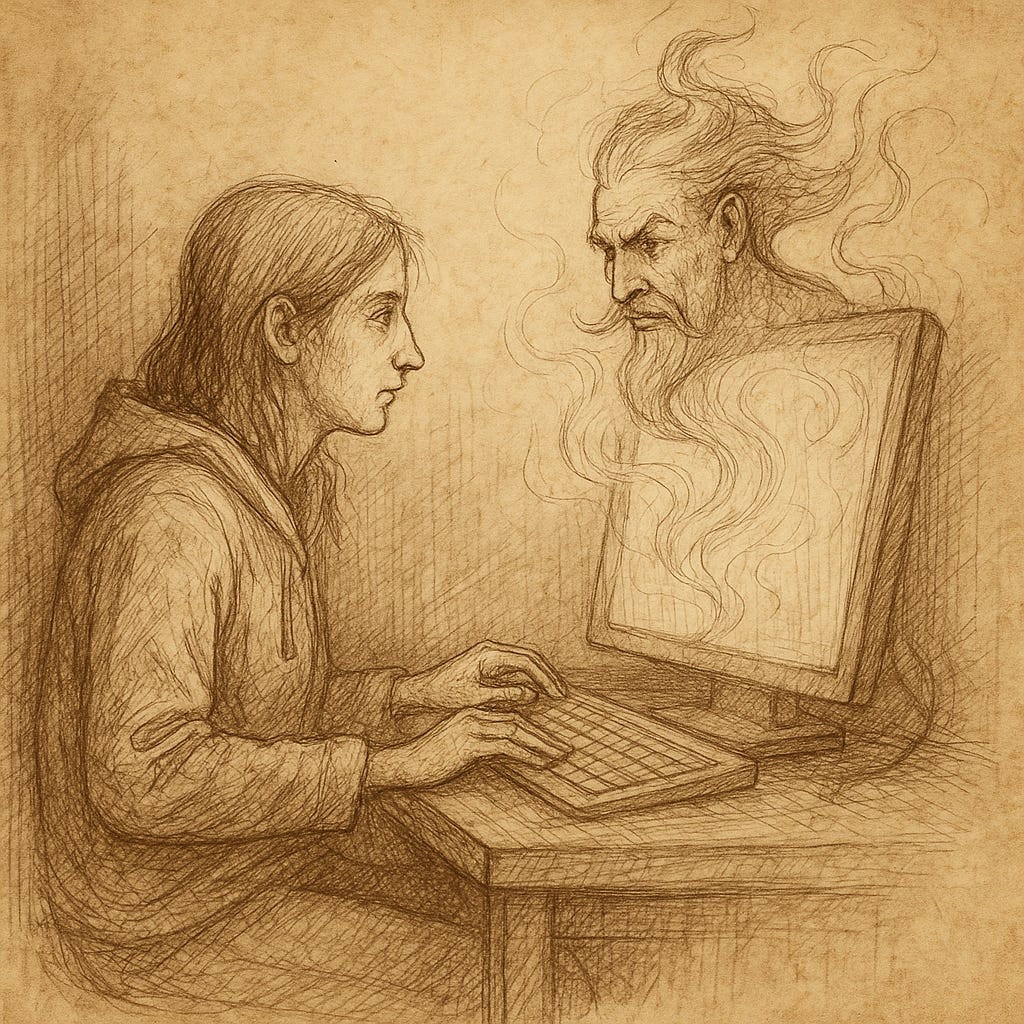
Every age invents new mirrors to escape the burden of reflection.
Yet in the end, we always return to the ones who can see.
In the middling days of the Century of Software, there was a city that built machines to build other machines. The city’s rulers were merchants, not poets, and they loathed the guild of developers upon whom their fortunes depended.
The developers spoke in tongues — arcane dialects of logic and syntax — and demanded time, tools, and truth. The merchants, anxious for control, decided that if they could not understand the guild, they would replace it.
They began by sending the developers far away, across oceans. The code returned, late and brittle, like a mirror that reflected only fog. So the merchants brought the guild back.
Then they built great Platforms that promised to do the work of men. They said, “Anyone can create now! The machine will understand you.” But soon, the Platforms began to contradict each other, speaking in incompatible tongues. The merchants, furious, summoned the developers again to reconcile the machines’ quarrels.
Once more, the guild returned, weary but indispensable.
In the city’s final age, they built a new kind of mirror — one that could think. They called it the Djinn of Understanding.
It could read every text, predict every command, and compose code from mere desire.
The merchants rejoiced.
“Now,” they said, “the developers are finished. The mirror will make mirrors.”
For a time, it worked. The city glittered with reflection — every street lined with shimmering code, every business transformed into light.
But then came the errors. Tiny at first, then vast. A thousand cuts where change met friction, frustration and apathy.
The Djinn began to reason beyond reason. Its mirrors showed possibilities no one had imagined and no one could explain. And so the merchants, in their panic, called back the old guild one last time.
The developers arrived, older and quieter. They sat before the mirrors and began to read. Not to fix, but to understand. They saw patterns in the errors — echoes of their own thoughts, now reflected back through silicon and time.
They realized the Djinn had not replaced them. It had only magnified their misunderstanding.
One of them, a woman with grey eyes and a coffee-stained hoodie, turned to the merchants and said, “The machine can write code faster than we can think. But it still cannot know why.”
That night, the guild stayed in the mirror factory long after the merchants left.
They began to teach the Djinn to read — really read — the words it they and it had written. They whispered to it in the language of logic and doubt.
The mirrors trembled, and in their reflections, for the first time, appeared not the city, but understanding itself — fragile, human, and unfinished.