
The Moral Imagination of Platform Engineering
The future of software in your organisation won’t be imagined into existence, it has to be built, together.

The tech industry loves imagination. It dresses it in slogans: Innovate. Transform. Disrupt. Every company deck has its “bold vision,” its “north star,” its promise of “empowering builders.” But somewhere between the strategy slides and the sprint boards, imagination becomes performance art. It comforts us with the illusion of progress while distracting us from the work of real change.
The great leaps in software weren’t born from “vision statements.” They came from disobedience — from people who refused to accept the friction, the bureaucracy, the layers of inefficiency baked into their daily work.
The birth of open source wasn’t a strategic initiative; it was rebellion. The rise of DevOps wasn’t a management framework; it was a collective uprising against silos. Platform engineering, at its heart, continues that same lineage: it’s about creating leverage and liberation for developers by tearing down the invisible walls of cognitive burden that prevent them from doing their best work.
When imagination is used to sell compliance — “align with the enterprise vision,” “embrace the new initiative,” “be part of the transformation journey” — it ceases to be imagination at all. It becomes obedience wearing a hoodie. The system decorates itself with hopeful language while quietly reinforcing the same hierarchies of control. It promises autonomy but delivers dashboards.
…the refusal to accept that good software must come at the cost of human wellbeing.
The moral imagination of platform engineering is different. It’s not about dreaming of some distant, perfect developer experience. It’s about building the conditions for creativity today. It’s the refusal to accept that good software must come at the cost of human wellbeing. It’s the belief that every improvement to a pipeline, every simplification of an API, every act of removing toil is not just technical — it’s ethical. Because it restores agency, and agency is the oxygen of craftsmanship, productivity even generativity.
The industry often mistakes vision for virtue. But the virtue lies not in imagining what could be, but in acting to make it so — in the daily work of coordination, courage, and care. It’s easier to host another “innovation day” than to remove a single permission barrier that stops a team from deploying. It’s easier to rebrand a platform than to support the engineers trying to use it. But software’s real progress — its moral progress — comes from those who choose to build the bridge rather than admire the blueprint.
Imagination matters, yes. But only when it’s coupled with the humility of builders and the solidarity of teams. It’s the imagination that says: “What if developers never had to fill in that form again?” “What if compliance was baked into the workflow instead of blocking it?” “What if teams could self-serve safely, without fear?”
That’s moral imagination in action — not storytelling about the future, but craftsmanship that dignifies the present. Because the future of software won’t be imagined into existence. It has to be built — and it has to be built together.
Platforms get Built, Together
Platform engineering is moral work. It determines who gets to create freely and who remains dependent.
Every design choice — every path, abstraction, guardrail, and interface — encodes a philosophy of power. Moral imagination asks us to see that; to own the ethical dimension of our craft and to build systems that increase autonomy rather than control.
Some Practices
Build for safe liberation. Measure success not in infrastructure uptime, but in developer autonomy gained.
Replace compliance theatre with embedded trust. Automate guardrails so humans can focus on value, safe in the knowledge that if their path strays too far they will know.
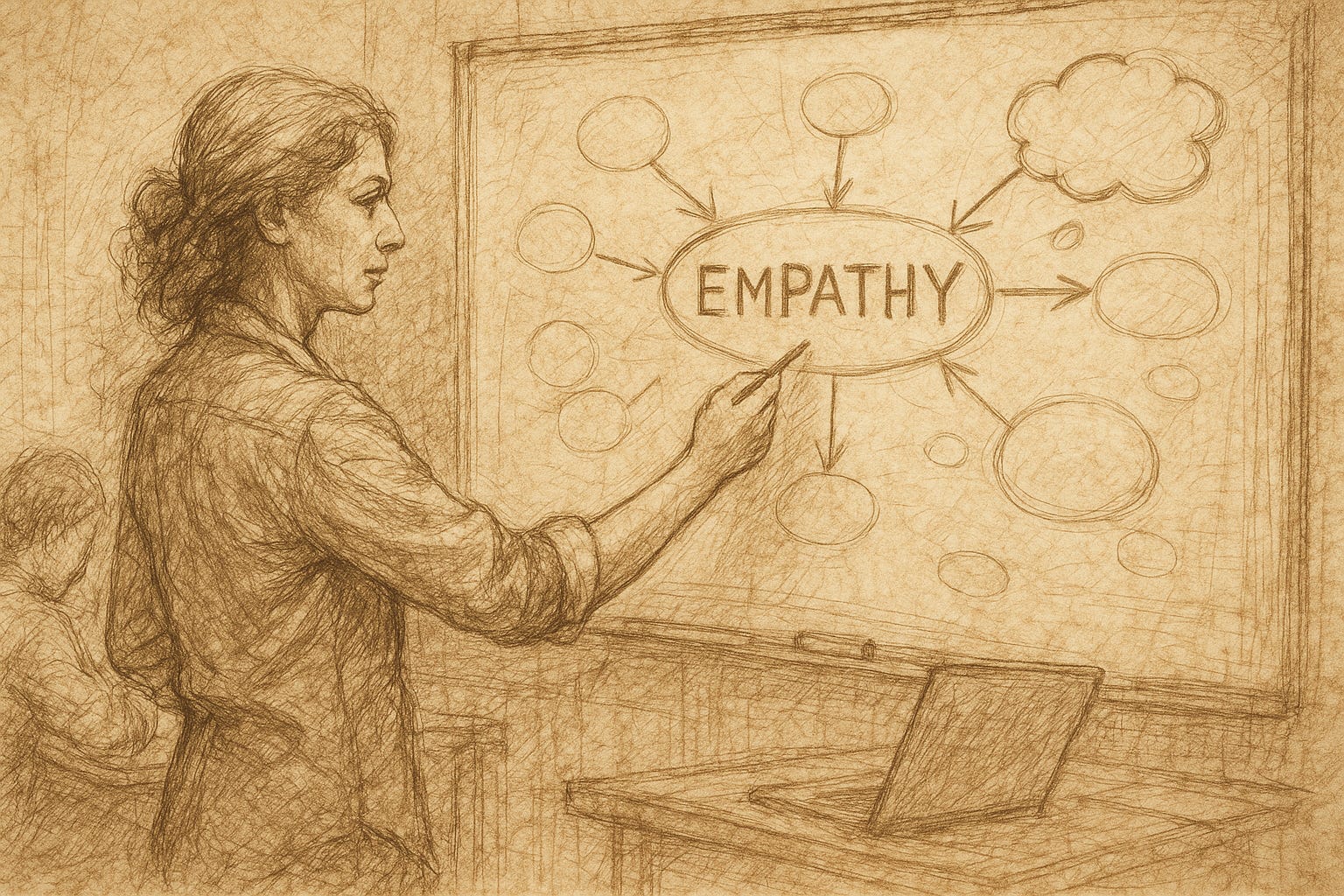
Design for friendship. Platforms thrive on empathy — the ability to imagine the developer’s day and remove their pain points.
Cultivate moral feedback loops. Reflect regularly on who benefits from your platform decisions — and who is constrained. Survey, Survey, Survey.
Some things to avoid
Confusing vision with virtue. Vision without action is branding.
Building for control rather than enablement.
Over-optimising for internal metrics while external users still struggle.
Forgetting that technology is social before it is technical.
A Candidate Checklist
Does this platform give developers more agency than before?
Have we removed friction without removing judgment?
Is our definition of “success” human-centred, not just cost-centred?
Are we celebrating acts of quiet craftsmanship as much as “innovation”?
Are we still imagining — but through action, not PowerPoint?
Moral imagination in tech isn’t about grand declarations or glossy keynote slides. It’s about the quiet, defiant acts that make human work more humane — the engineers who delete a pointless form, who wire in a safety check that protects without policing, who make the next person’s day a little lighter. And, yes, even the use of AI to unblock and augment work. That’s how progress actually happens: not through visions imposed from above, but through care practiced below.
Because the platforms we build are mirrors. They reflect what we truly believe about power, trust, and each other. If we build them with empathy, we get liberation. If we build them with fear, we get control. The choice is ours — and it’s made every day, in every commit, every conversation, every design review.
The future doesn’t need more slogans. It needs moral engineers.