
The Power in your Pause
In a world that worships motion, your pause is crucial rebellion

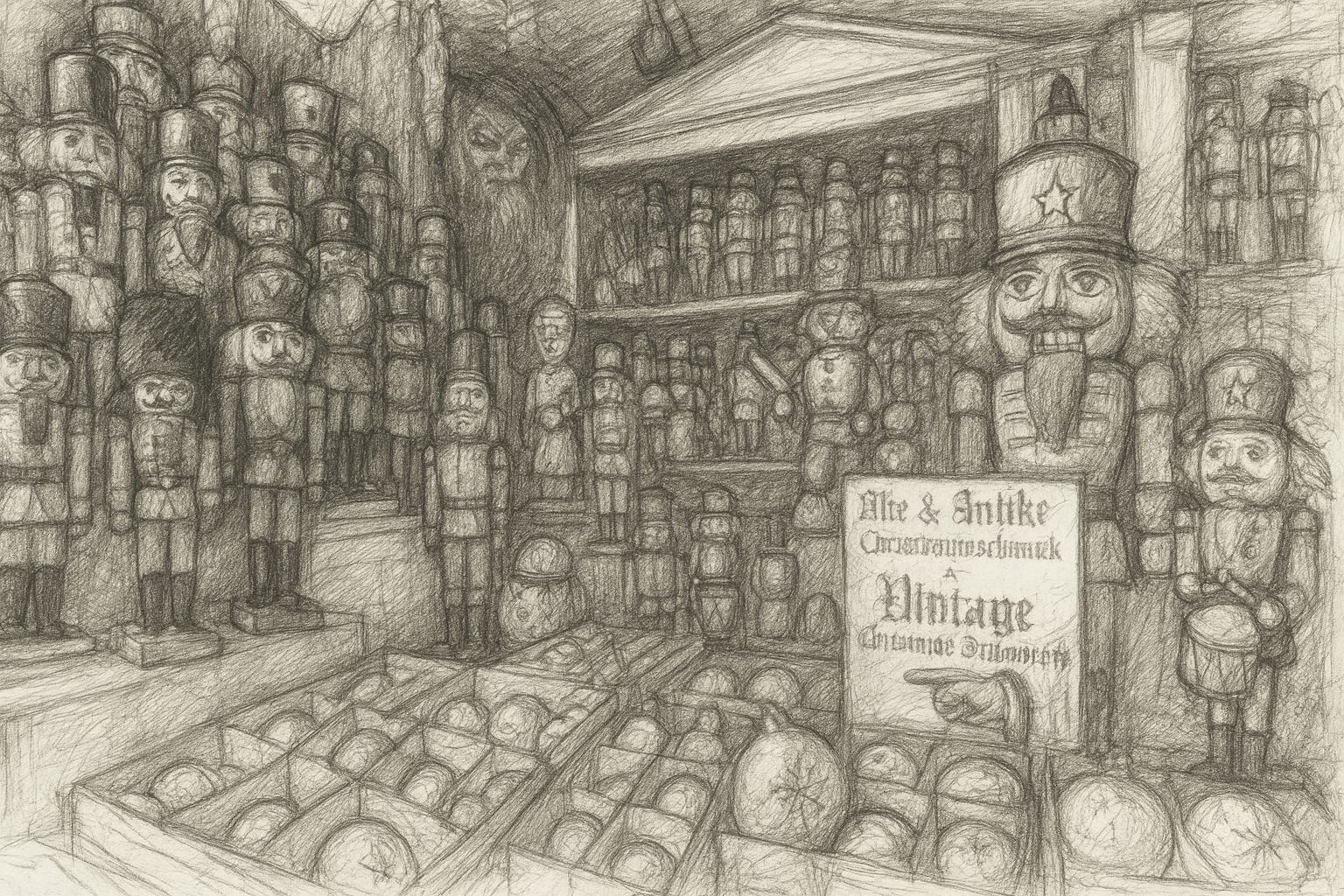
(Image: Nutcracker stall at a Christmas Market in Munich)
As the conference season for 2025 comes to a close I’d like to send out a huge thanks to everyone that invited me to give a workshop or a keynote at their brilliant conferences this year. I’ve travelled from New York to Munich via London (many times) and every step and moment has been wonder.
Sitting here in the foyer of DevOpsCon Munich, drinking hot chocolate and warming up after the wander through the Christmas Markets, I can only hint at how grateful I feel that this crazy life in software brings these moments to my door.
But as much as I love the travel, training and technology experimentation there’s power in the pause that’s possible this time of year as people begin to turn the annual page. For me it’s a chance to stop, take stock, remember, rest and recover.
And that’s what today’s enchiridion entry is all about. A reminder and a celebration.
A celebration of your power. Your power to pause.
This entry is dedicated in thanks to Emma McCleary.
My partner in pause and the true master of the art of joyfully doing “nothing”.
Wisdom in your Gaps
A developer sits at her desk between two meetings. For once, she does not reach for Slack, email, news, or anything else with an icon.
She closes her laptop. She breathes. For thirty seconds, nothing happens. Then she notices the sunlight refracting in her coffee.
The tension in her shoulders melts a few millimetres. There’s quiet sense that she is not drowning—she is simply here. Those thirty seconds do more for her clarity than the previous three hours of activity.
This is the art of pause: the smallest space that returns you to yourself.
Your Power in your Pause
In a world that worships motion, your pause is rebellion. In a culture that monetises attention, doing nothing is an act of mastery.
Modern life conspires to keep you in motion: notifications strobing, schedules stacking, workstreams multiplying. Identity tethered to productivity graphs and progress bars.
The moment you stop, an unease arises—Shouldn’t I be doing something? Producing something? Planning something? Optimising something?
The pause exposes a truth we spend entire careers outrunning: being is not a gap between doings; it is the ground of all doing.
To pause is not laziness. It is the oxygen for discernment. To plan nothing is not avoidance. It is the precondition for noticing what your life is actually asking of you. To rest is not withdrawal. It is remembering that you are more than the tasks that currently possess you.
To simply be together—without agenda, stimulus, or achievement—is not unproductive. It is the deepest form of human presence.
The world will not hand you the pause. You must claim it deliberately, defiantly, as a habit of self-governance.
Some practices to consider
Practise Doing “Nothing” for Real — Sit. Breathe. Look out a window. Feel the weight of your body. Let boredom arise without medicating it. You’re not waiting for something; you’re being with what is.
Schedule Blankness — A calendar full of obligations is a calendar devoid of meaning. Protect patches of white space—unassigned, unoptimised, unproductive.
This is not slack; it is structure for discernment.
Rest and Notice — When you rest, attend to the small. The sound of your breathing. The texture of silence. The subtle wakefulness returning behind your eyes. You are tuning your nervous system to something more valuable and enriching than urgency.
Time Together Without Purpose — Sit with someone you care about and resist the instinct to fill the air. Shared presence without narrative is a form of trust.
It says: You don’t need to perform for me, and I don’t need to perform for you.
Be Joyful in the Unpacked Moment — Joy sneaks in through the cracks that busyness seals shut. When you leave moments unstuffed, joy expands to fill the space.
Some things to avoid
Turning the pause into another productivity hack (“My breaks will make me more efficient”).
Confusing numbness for rest (scrolling until your brain dissolves is not pausing).
Mistaking emptiness for meaninglessness (the pause feels unfamiliar because you’ve neglected it).
Judging yourself for not “using” the time (the pause is the use).
In the end, the pause is not an escape from life but a re-entry into it. When you stop long enough to feel the grain of a moment, the noise drops away and the signal finally comes through. Clarity is rarely found at speed; it hides in the stillness we keep avoiding.
The world will continue to reward frenzy. It will applaud your responsiveness, celebrate your busyness, and seduce you into believing that motion is meaning. But every wise craftsperson—developer, leader, artist, human—eventually discovers the opposite: that the most decisive moves come from the quietest rooms inside you.
Practising your pause is not a luxury but a discipline. Guard it the way you protect your best ideas. Let rest become a habit, blankness a boundary, shared presence a form of devotion. In a culture that urges you to fill every moment, choose instead to deepen it.
The pause is where you become whole enough to return to your work—awake, available, and fully alive.
Further Reading
Epictetus, Discourses — on the discipline of attention
Seneca, On the Shortness of Life — against the theft of time
Jenny Odell, How to Do Nothing: Resisting the Attention Economy — reclaiming attention as an act of resistance