
The Starter at the End of the World
A short Sunday story on the lessons in software that I've learned from sourdough

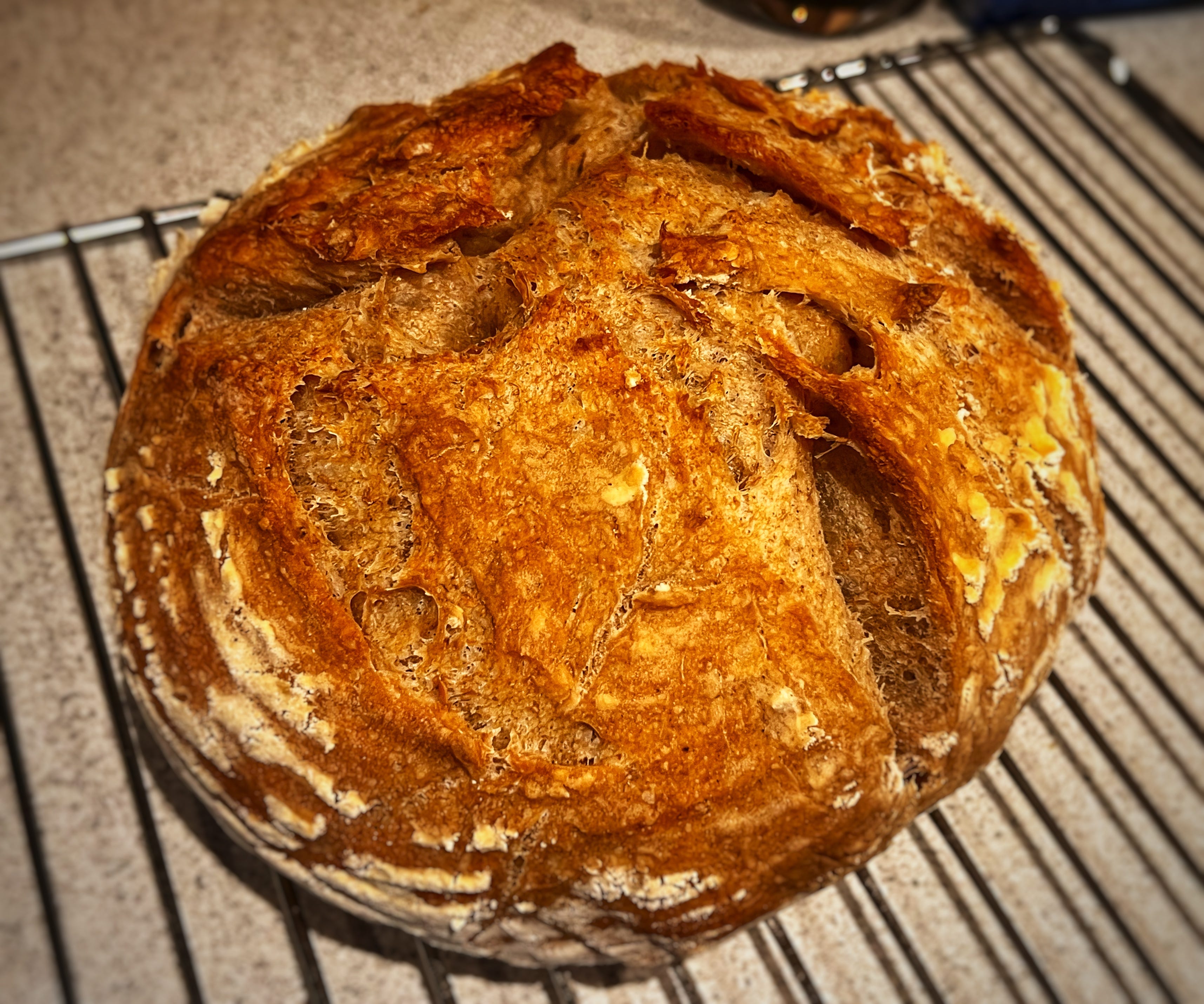
(Image: My latest loaf)
I bake. That’s probably not the entire truth. I bake bread, obsessively. The slow process is a perfect reminder, regardless of the day, to pace myself.
I didn’t get into baking at all during the pandemic. When everyone is doing something, I’m probably not. I don’t know why. I’m just not a herd animal at heart I guess. It’s not snobby elitism, or some sense of wanting to be different, I just can’t. I’m blocked. If everyone else is on the train, I’m on a bike heading in a completely different direction, only to then discover the joys of the train 5 years later.
So here I am, 5 years later, baking sourdough like it’s my living. And that’s where this story comes from. In my little smiles as I see the parallels of writing good software humanely, and my little obsessive art of baking.
I hope you enjoy it this Sunday. Maybe grab a tea and a slice of toast and settle in. While I’m off tending to a starter, learnings lessons about software, seeking the perfect sourdough. Knowing I’ll never quite make it, and it’s the learning that counts.
A developer once found herself in a kitchen at 2 a.m., staring at a jar of bubbling flour like it had personally betrayed her.
She wasn’t a baker. She barely trusted yeast. But she had been told — by a colleague she admired and slightly feared — that every developer should maintain a sourdough starter at least once in their life.
“For patience,” he’d said. “And humility. And learning when to leave the damn thing alone.”
She tried. Days passed. Nothing happened. She fed it. She stirred it. She worried it like a failing CI pipeline. Still nothing. And then, just when she was convinced she had created the world’s least interesting biology experiment — the jar breathed. It swelled. It frothed. It came alive.
It reminded her of a system deploy that finally behaves, except with less swearing and fewer compliance approvals and database migrations.
She became invested in this ridiculous little organism. She gave it a name, — “Crumpf.”, we developers name things badly. And she learned things, inconvenient things, about the way her world actually works.
“They do not care about your deadlines, your feature branches, or your sprint goals.”
The first thing was patience. Not the gentle, meditative kind you pretend to cultivate on weekends. Real patience — the kind you earn by doing nothing when you desperately want to intervene. Starters bloom at their own pace. They do not care about your deadlines, your feature branches, or your sprint goals.
She realised most bugs she’d chased into the early morning happened because she’d tried to “fix fast” instead of “wait, observe, understand.” Sometimes systems, like dough, need time to settle before you poke them again.
“Starve teams of support and they flail. Overfeed them with golden paths, rules, and “best practices,” and they lose the ability to think with their hands.”
The second thing she learned was rhythm. If you feed the starter too much, it collapses from indulgence. Too little, and it starves. This felt uncomfortably like the balance between platform abstraction and developer autonomy. Starve teams of support and they flail. Overfeed them with golden paths, rules, and “best practices,” and they lose the ability to think with their hands.
Crumpf didn’t tolerate either extreme. Developers, she realised, were not that different.
“you just need to stop narrating your own certainty long enough to listen”
Then there was observation. Starters don’t speak. They hint. A sour smell. A wobble. A sudden rise like a poorly explained infrastructure cost curve. You learn to read what the dough is trying to tell you because if you force it into your expectations, you get a culinary crime scene. Software is the same: the system is always communicating, you just need to stop narrating your own certainty long enough to listen.
But the deepest lesson came the night the jar predictably exploded.
She’d closed the lid. Tightly. The pressure built. The jar detonated with the enthusiasm of a failed release sprint. The kitchen looked like a Jackson Pollock mural rendered in sticky beige.
And she realised: anything alive needs room to breathe — dough, teams, systems, yourself. Seal things too tightly — with policies, with architecture, with certainty — and they blow up in your face at 2 a.m., leaving you to scrub existential questions off the cabinets.
In time, she baked. The bread was imperfect, crusty in the wrong places, a little shy in the crumb. But it was hers — the product of attention, patience, rhythm, listening, and not over-tightening the lid on things that want to be free.
At work the next week, she closed a ticket with a note she’d never written before:
“Let’s give it another hour. The system hasn’t finished telling us what it’s doing.”
Her teammates blinked. This was new. This was… calm.
She went home that night, fed Crumpf, and whispered a small thanks — to the jar, to the bubbles, to the quiet microbial orchestra that had taught her more about engineering than a shelf of software books ever had.
And as she watched it rise, she realised the truth every baker, philosopher, and platform engineer eventually discovers:
Good bread, like good software, is the slow victory of careful habits over restless hands.