
When Command-and-Control Kills Creativity
How distrust is the enemy of invention

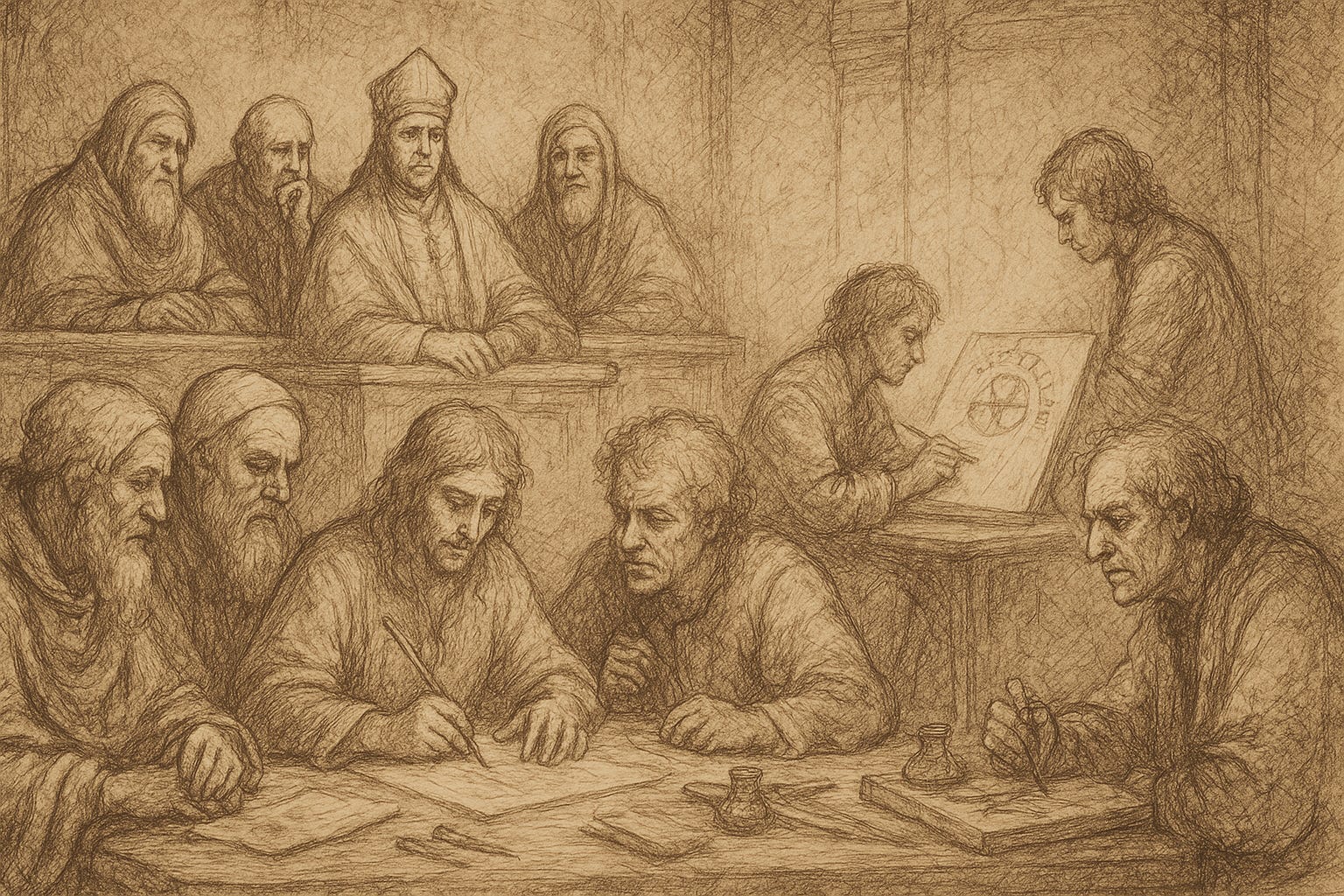
There is a particular chill that enters a room the moment command-and-control leadership takes hold. It’s not always loud. Sometimes it arrives wearing “professionalism,” or “governance,” “process adherence” or “policy rationale.”
The effect though is unmistakable: creativity contracts. Shoulders tense. People stop telling the truth. And developers—those strange, imaginative creatures who build worlds out of text—retreat into self-protection.
I saw this recently as the ‘leadership’ of a charitable organisation set agendas, set timescales, and set culture aflame while cloaking blame in policy. You’ve probably seen it up close too. The moment something goes wrong, the reflex is blame first, investigate later. Or worse, suspend first, investigate later. A leadership reflex masquerading as discipline. A managerial flinch disguised as rigour.
Command-and-control always claims it is protecting the system. But what it really protects is the system’s anxiety.
The Inquisition Reflex
In these environments—whether corporate or charitable/voluntary—the root assumption is brutal:
people are guilty until proven innocent.
If an error occurs, the system assumes:
The process was correct,
the policy was sufficient,
the controls were flawless,
therefore a human must have failed.
This creates a perverse geometry: the more rigid and idealised the process landscape becomes, the more any deviation is treated as moral failure rather than system failure. It’s an inquisition logic—a belief in the infallibility of the doctrine and the fallibility of the practitioner.
But processes are not infallible. Policies are not the truth. They are artefacts of previous thinking, shaped by previous constraints, drafted by imperfect humans guessing at an imperfect world. A world where it is tempted to focus on the work as it is imagined, not how it is done. When we elevate these fictions beyond scrutiny, we create a theology of procedure—and anyone who steps outside the liturgy becomes a heretic.
And, sadly, innovation and creativity rarely survives these inquisitions.
The Collapse of Trust
The moment people sense that leadership’s first move is punishment, not understanding, something catastrophic happens: They stop taking creative risks.
People stop:
exploring novel solutions,
suggesting alternatives,
experimenting at the edges,
asking difficult questions,
surfacing near-misses,
proposing structural improvements.
Instead, they optimise for safety.
Not system safety—psychological safety.
They work defensively. They communicate defensively. They document defensively. As a developer, every commit, message, and decision becomes an attempt to protect yourself from suspicion.
And when people are working primarily to avoid blame, innovation flatlines. You cannot create from inside a flinch.
The Slow Death of Invention
Blame cultures hollow out developer creativity in three predictable stages:
Contraction — People shrink their behaviour to what is “safe.” Creativity fades into compliance.
Silence — Problems, risks, and opportunities go unspoken. Leaders see calm waters and assume competence, not fear.
Exit — The most creative, empathetic, trustworthy people leave—voluntarily or emotionally—even if their name remains on the rota.
This is often why voluntary organisations suffer even more acutely. People donate their time and energy out of love, purpose, and community. The moment you introduce suspicion and punishment, the equation collapses. No one will volunteer for an inquisition.
The Paradox of Control
Command-and-control imagines that tighter oversight increases safety, but distrust decreases safety because it forces errors underground.
Engineers and volunteers alike stop raising issues early. Teams become masters of concealment instead of candour. Slow degradation masquerades as stability.
It’s the paradox every high-risk domain eventually learns:
if people fear consequences more than they fear failure, you create the perfect conditions for catastrophe.
This is the lesson from so many domains; from aviation, healthcare, NASA, resilience engineering, and every high-stakes voluntary service.
Blame kills learning and, eventually, growth. Systems and services die.
The Antidote: Trust by Default
To restore creativity and safety, you must abandon the presumption of guilt and adopt a different principle:
No one comes to work to fail. Most errors are system errors.
Investigate the system first, the individual last.
When you start from trust:
people surface insights early,
they bring ideas freely,
creativity becomes habitual,
innovation returns,
psychological safety stabilises the system,
and responsibility becomes shared, not policed.
Creativity thrives where trust is ambient and abundant, not rationed.
When you step back from organisations because the air turns poisonous, it is not weakness. It is wisdom.
Command-and-control doesn’t just stifle creativity; it corrodes humanity. And in any system—software or social—that corrosion eventually becomes the real cause of failure.
The tragedy is that inquisitions masquerade as leadership. The hope is that genuine leadership can be rebuilt.